
Checking Criminal Records in Kahului
Start with the event and the record needed. Maui Police creates the incident or arrest report. The Hawaiʻi Judiciary creates a case after charges are filed. Hawaiʻi SAVIN addresses state custody, while eCrim provides the public adult-conviction product. No one search combines those sources.
- For a recent Kahului event, contact Wailuku Patrol District or MPD nonemergency routing.
- Request the report through the County GovQA portal, mail, or fax.
- Search eCourt Kōkua for a filed District or Circuit case.
- Use Hawaiʻi SAVIN for current state custody or parole status.
- Use eCrim for adult Hawaiʻi convictions, not pending arrests.
Compare names with birth data and case identifiers. An MPD report number may differ from the Judiciary case ID.
Kahului Criminal Records Without City Hall
Kahului had 28,219 residents in the 2020 Census and is Maui County's largest census-designated place. It is not an incorporated city. Hawaiʻi has no municipalities below the county level, so Kahului has no mayor, city police department, municipal records office, city jail, or municipal court.
MPD serves Kahului as one county police department. District and Circuit Court functions belong to the state Judiciary at Hoapili Hale in Wailuku. A reference to a “Kahului municipal court record” is inaccurate. Look for a Second Circuit or District Court file tied to the incident.
Kahului Police Department Records
There is no separate Kahului Police Department. The Maui Police Department Wailuku Patrol District serves Kahului, and the central Records Section at 55 Mahalani Street keeps county police material. Records is (808) 244-6355. The county nonemergency line is (808) 244-6400, and Booking & Receiving is (808) 244-6407.
MPD Records maintains incident reports, arrest and booking documents, warrant-related records, civil-process material, covered-offender files, and UIPA work. Disclosure varies by requester and case status. An involved person or authorized representative can qualify for material that an uninvolved requester receives only in redacted form.
Requesting a Kahului Police Report
The County UIPA instructions direct online users to GovQA. Create an account, select the request type, describe the Kahului event, attach identification or authorization, submit, and track agency messages. Give the report number when known. Otherwise provide the date, time, and best-known location.
| Core fields | Report number, request date, name, address, and signature |
|---|---|
| Current additions | Email, phone, photo ID, and incident facts |
| Representative | Signed authorization and qualified requester's ID |
| Fallback | Mail to 55 Mahalani Street or fax (808) 244-6418 |
MPD says most reports arrive electronically within ten business days, but that is not a guarantee. Reports under 25 pages generally have no stated copy fee. Larger requests may bring page, media, search, or segregation charges.
The official Maui County UIPA page shows the government request route used for Kahului records.
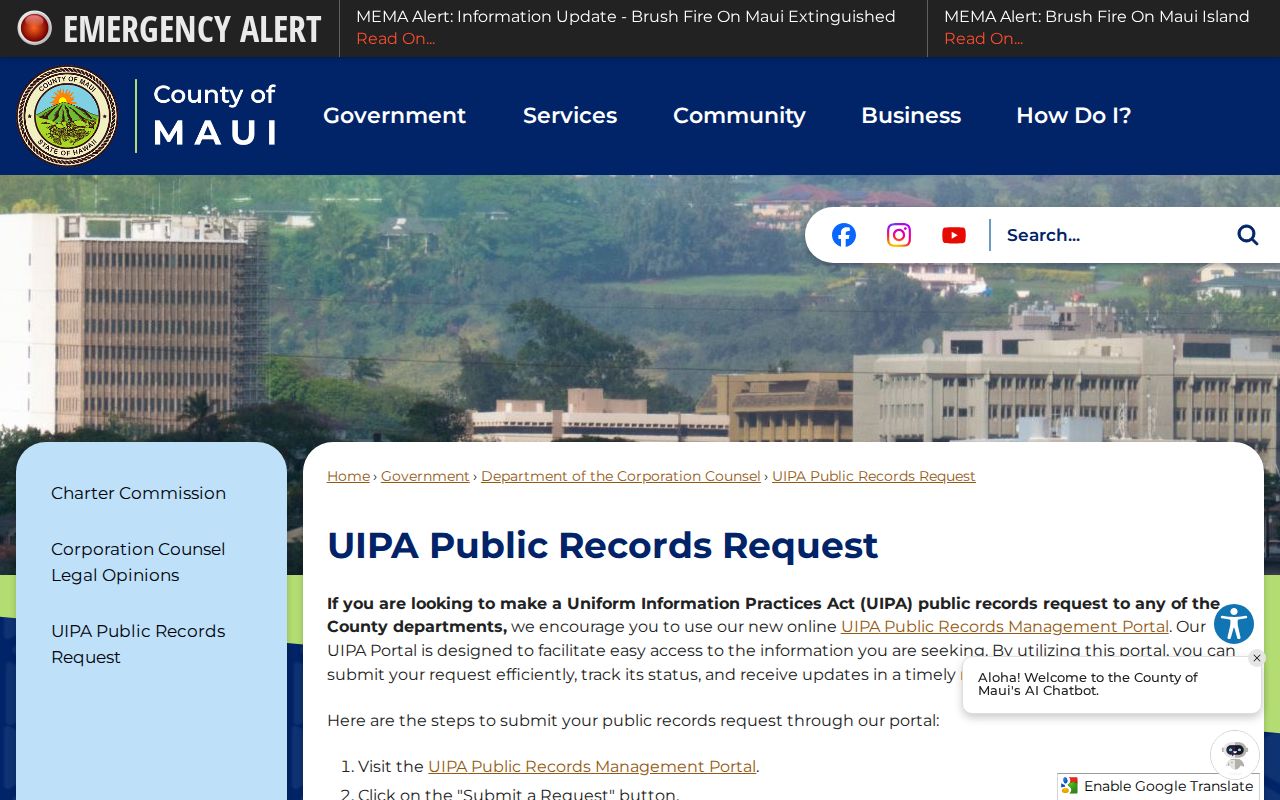
The page helps a Kahului requester reach the correct county workflow without inventing a city records office.
Kahului Arrests and Bookings
A Kahului arrest begins in MPD records, not a city booking log. Booking & Receiving handles the immediate police stage. If the person remains detained, custody may move to Maui Community Correctional Center in Wailuku. MCCC is state operated, not a county jail.
SAVIN and VINELink can show DCR custody or parole status. A missing result does not prove there was no Kahului arrest. Release, lag, or a different jurisdiction can explain the gap. Check MPD and eCourt separately. The countywide Maui arrest lookup explains all channels.
Tracing Kahului Records After Booking
Timing accounts for conflicting results. MPD can have a Kahului report before a court case exists. MCCC may confirm custody before a docket is searchable. Prosecutors decide which counts to file, and filed counts can differ from arrest allegations.
Kahului record timeline: MPD report › Booking & Receiving › MCCC when detained › prosecutor decision › District or Circuit docket › HCJDC disposition.
A booking is not a conviction. A complaint is an allegation. Read the judgment for the result of each count.
Federal custody is a separate layer. The official Federal Bureau of Prisons Inmate Locator applies when a Kahului case resulted in federal imprisonment.
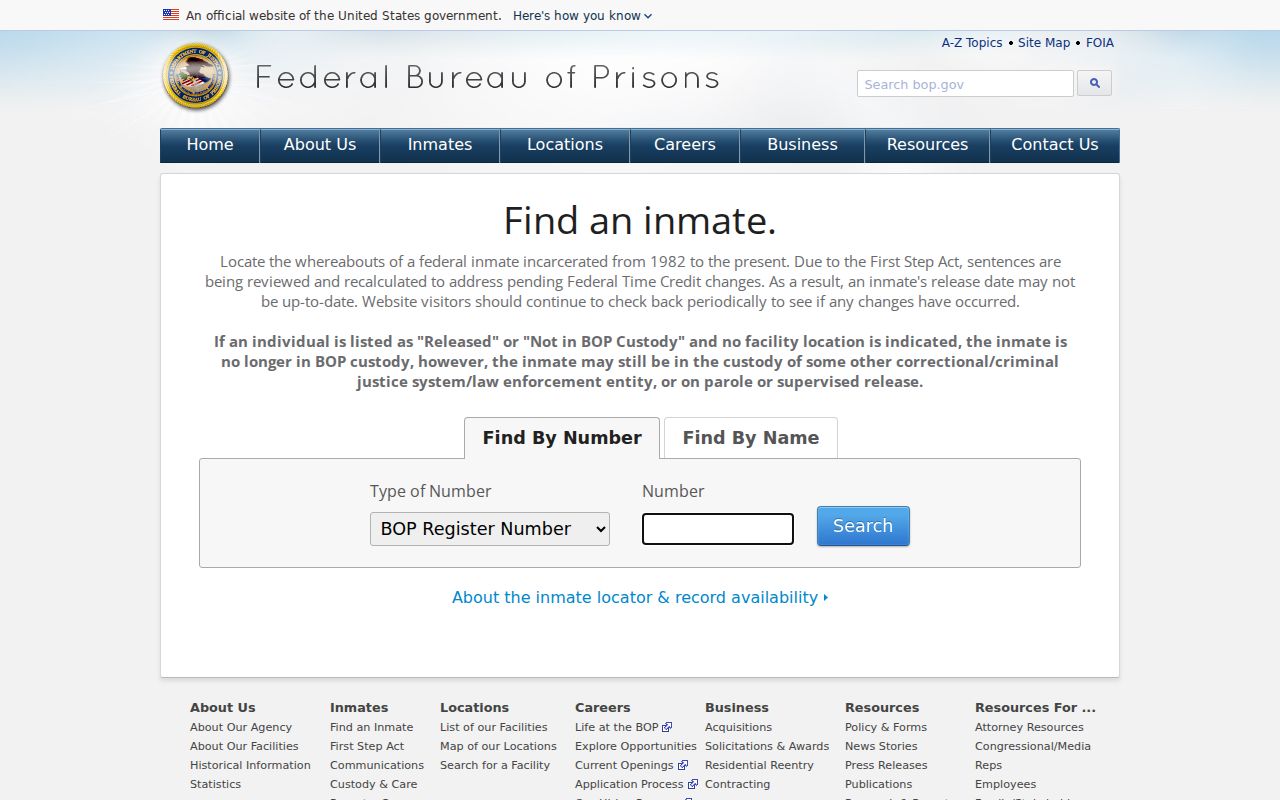
A BOP result cannot replace MPD, MCCC, or Hawaiʻi court checks because it covers federal custody only.
Municipal Court Records in Kahului
Kahului has no municipal court. The state District Court handles Maui misdemeanors and relevant traffic matters, while the Circuit Court of the Second Circuit hears felonies. Search eCourt Kōkua before contacting the clerk or traveling to Wailuku.
| Court Name | District and Circuit Court of the Second Circuit |
|---|---|
| Case Types Heard | District misdemeanors and traffic/criminal matters; Circuit felonies |
| Case Lookup Channel | eCourt Kōkua, courthouse terminal, clerk, or Legal Documents |
| What the Docket Shows | Case ID, parties, counts, events, status, and disposition |
| Copies & Fees | Basic data and terminal review free; online documents paid when available |
Kahului Court Search Identifiers
Party search uses last and first name. Middle name and dates narrow results, but variants can hide a match. Case Search can accept a Case ID, Arrest Number, OTN, or SID. Maui legacy IDs may need the JIMS format with circuit digit 2.
A PDF icon marks a purchasable public document. No icon does not prove the document is absent. Older files may be off site. Hoapili Legal Documents checks nonconfidential Circuit material at (808) 244-2969.
The Maui County Department of the Prosecuting Attorney describes the office that makes filing decisions in Kahului cases.

The prosecutor is not a public docket substitute. Charging information becomes authoritative for public case tracking when it is filed with the Judiciary.
Where Kahului Records Go
MPD keeps the source report. The Maui prosecutor makes charging choices, but state courts create the filed case and disposition. Fingerprints, arrest cycles, and outcomes flow to HCJDC.
Record flow: Maui Police for Kahului › Second Circuit courts › Hawaiʻi Criminal Justice Data Center
Start with MPD for recent events, eCourt for filed cases, and eCrim for later adult convictions. The Maui criminal court cases page covers docket detail.
Kahului Crime Data Needs Context
No official Kahului-only crime rate was found. MPD and UCR figures are countywide or may use patrol districts, and those boundaries do not match the Kahului CDP. Do not divide a Maui County offense total by Kahului population.
Central Maui planning records explain Kahului's regional role but do not prove a crime trend. A dashboard result is useful only when year, offense definition, and geography are clear.
Note: Kahului population and Maui County police statistics describe different geographic units and cannot form one valid local rate.
Kahului's role as Central Maui's transport and commercial center is documented in regional planning. County workshops at UH Maui College also show that land use and public services are managed through Maui County rather than a separate Kahului government. That civic structure is why a records search consistently routes west to Wailuku offices.
County or patrol statistics can still help frame a question when they are labeled honestly. Record the source year, reporting system, and geography. Avoid claiming that a change in a county total occurred inside Kahului. An individual report or court case can confirm an event, but it cannot establish a community crime rate.
Kahului Online Incident Reporting
MPD online reporting is for eligible nonemergency incidents, not every crime or active danger. A submission creates a county police record, not a Kahului city file. Follow current MPD instructions and use dispatch when an event does not qualify.
Keep the confirmation and report number. That number helps a later GovQA copy request. If prosecution follows, search the separate court system rather than expecting the police number to become the court Case ID.
Public Access Rules in Kahului
MPD applies public-record law to police reports. The Judiciary applies court rules to dockets. HCJDC controls repository dissemination. Public does not mean unredacted. Active investigations, confidential arrest data, juvenile matters, identifiers, and sealed files may be withheld.
Key Statutes:
HRS chapter 92F, UIPA gives access to government records subject to privacy and security exceptions.
HRS §846-9 governs dissemination of criminal-history record information.
Hawaiʻi Court Records Rules preserve access while protecting confidential data and personal identifiers.
UIPA access begins with a clear description of the government record. It does not require MPD to answer broad questions or create a new analysis. A narrow Kahului request should identify the event, the people or property involved when appropriate, and the record sought. MPD may segregate protected details from releasable material, which is why two requesters can receive different versions of the same report. The qualified-requester rules also explain why signed authorization matters when one person acts for another.
Court access follows another standard. eCourt Kōkua excludes sealed and confidential cases, while a visible docket may still omit documents that cannot be purchased online. Personal identifiers must be protected in court filings. If a Kahului case seems incomplete, compare the event list with the clerk's available file rather than assuming the missing item never existed. An older record may also require retrieval from off-site storage.
HCJDC dissemination is narrower still. Its public eCrim result is adult conviction information. Pending arrests and arrests that did not end in conviction are confidential to the general public through that product. Someone reviewing their own identity-linked history can use the official access-and-review process instead. That difference protects private material while leaving court and police access to their own governing rules.
Qualifying non-conviction arrest information may be eligible for expungement under HRS §831-3.2. Expungement concerns the arresting agency and central repository, while court access is a related but distinct question. Since July 1, 2025, HCJDC sends qualifying orders to the Judiciary for consideration of public electronic court-record sealing or removal. A Kahului requester should confirm both systems instead of assuming one action changed every copy.
Kahului access is clearest when each Kahului event is traced by its official identifier. Kahului police material stays with MPD, while Kahului charges and outcomes belong to the state courts.
Kahului reports, Kahului dockets, and Kahului conviction results must be verified at their respective official sources.